


Stronger Steps Start Here
Foot Drop – Dr. Mangal’s Speciality Clinic
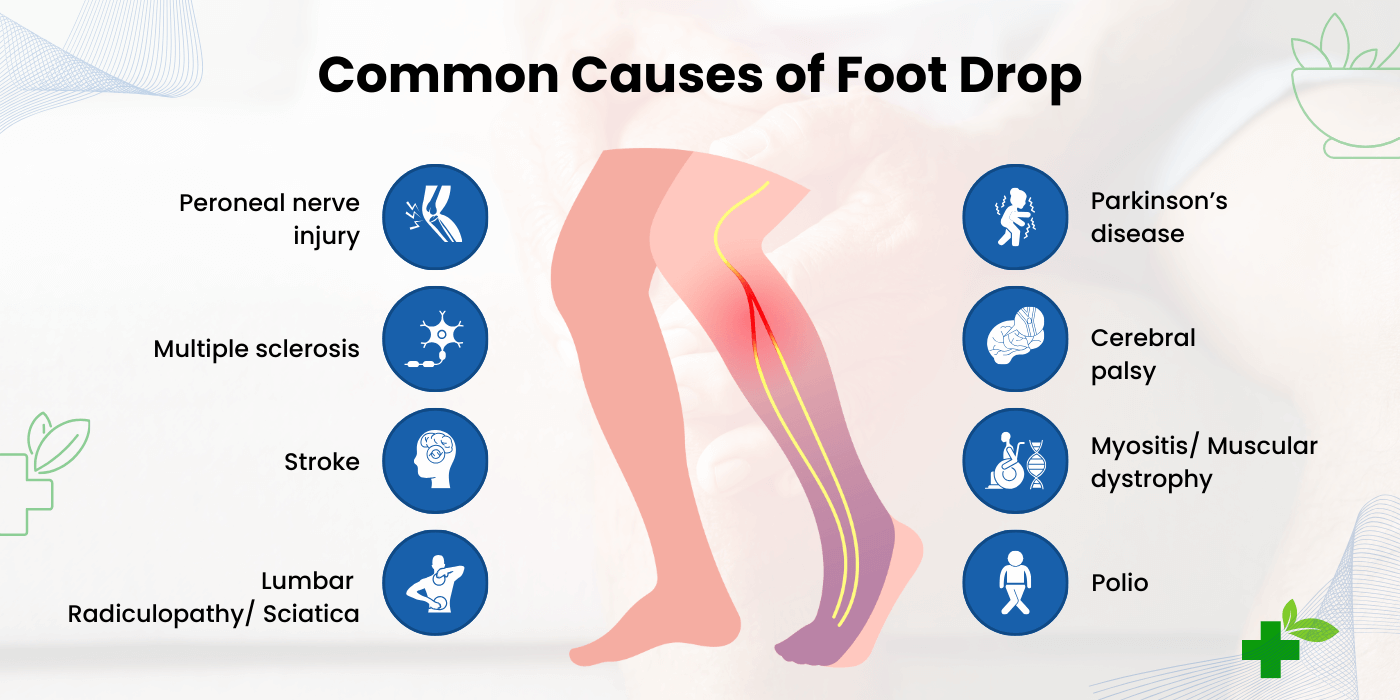
Foot Drop is a condition where a person is unable to lift the front part of the foot due to weakness or paralysis of the muscles responsible for ankle dorsiflexion. This causes the toes to drag while walking, leading to a characteristic high-stepping gait as the person lifts their knee higher to avoid tripping. Foot drop can result from nerve injury (commonly the peroneal nerve), muscle weakness, or neurological disorders such as stroke, multiple sclerosis, or spinal issues.
Types of Foot Drop We Treat
- Neurological Foot Drop – Caused by nerve damage or disorders affecting the brain, spinal cord, or peripheral nerves. Examples: Stroke, multiple sclerosis, neuropathy
- Muscular Foot Drop –Occurs when the muscles responsible for lifting the foot become weak due to disease or degeneration. Examples: Muscular dystrophy, myopathy
- Mechanical Foot Drop –Happens when structural problems—like tendon rupture, deformities, or severe injury—prevent the foot from lifting properly
- Peroneal Nerve Injury Foot Drop – The most common type; caused by damage or compression of the common peroneal nerve near the knee
- Post-Surgical Foot Drop - Develops after surgeries involving the hip, knee, or spine due to nerve stretch or compression.
Common Symptoms
- Inability to lift the front part of the foot
- Toes dragging on the ground while walking
- Frequent tripping or falling
- Weakness in the ankle or toes
- Numbness or tingling on the top of the foot or outer leg
- Foot slapping the ground with each step
- Muscle wasting in long-standing cases
- Reduced mobility and poor balance